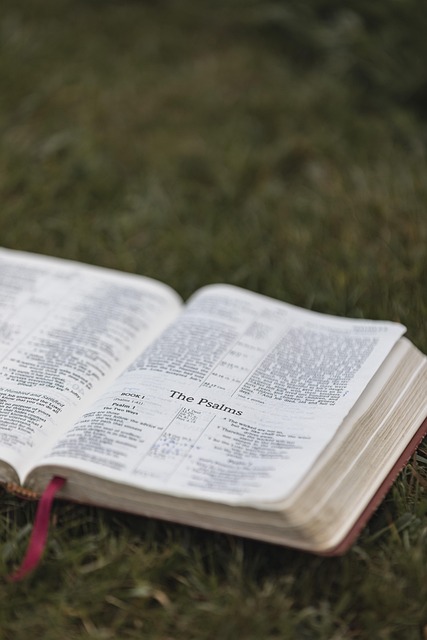
The Bible is not just another book. It is the living Word of God, breathed out by the Holy Spirit, preserved through generations, and given to us as a lamp for our journey. Second Timothy 3:16–17 declares: “All Scripture is God-breathed and is useful for teaching, rebuking, correcting and training in righteousness, so that the servant of God may be thoroughly equipped for every good work.” This verse alone shows the Bible’s central place in the life of every believer. It teaches, shapes, guides, corrects, and equips. Without the Bible, Christianity collapses into mere human opinion. With the Bible, faith rests on the sure foundation of God’s truth.
Throughout history, wherever the Bible has been cherished, believers have grown strong, churches have flourished, and societies have been transformed. Wherever it has been neglected, spiritual decay sets in. Jesus Himself declared, “Heaven and earth will pass away, but my words will never pass away” (Matthew 24:35). This means the Bible is eternal, unchanging, and utterly reliable. The role it plays in a Christian’s life is not optional; it is essential.
The Bible as the Word of God
First, we must recognize what the Bible truly is. It is not man’s reflections about God; it is God’s revelation to man. Second Peter 1:20–21 explains: “Above all, you must understand that no prophecy of Scripture came about by the prophet’s own interpretation of things. For prophecy never had its origin in the human will, but prophets, though human, spoke from God as they were carried along by the Holy Spirit.”
This means the Bible carries divine authority. When we read Scripture, we are not merely reading history or poetry; we are hearing the voice of God. Hebrews 4:12 says, “For the word of God is alive and active. Sharper than any double-edged sword, it penetrates even to dividing soul and spirit, joints and marrow; it judges the thoughts and attitudes of the heart.” The Bible is not dead ink on paper; it is living power. That is why it convicts sinners, strengthens saints, and silences the devil.
When Jesus was tempted in the wilderness, He responded to Satan three times with “It is written” (Matthew 4:4, 7, 10). He did not argue in His own wisdom. He stood firmly on the written Word of God. If the Son of God Himself leaned on Scripture to defeat the enemy, how much more must we?
The Bible as Our Daily Bread
The Bible plays the role of nourishment. Just as the body needs food daily, the spirit needs the Word daily. Jesus said, “Man shall not live on bread alone, but on every word that comes from the mouth of God” (Matthew 4:4). Skipping meals weakens the body; neglecting the Bible weakens the spirit. Many Christians wonder why their faith feels weak, their prayer life feels dry, or their joy feels stolen. Often, the reason is simple: they are spiritually starving because they are not feeding on God’s Word.
Jeremiah described his experience with Scripture: “When your words came, I ate them; they were my joy and my heart’s delight” (Jeremiah 15:16). Notice the language: “I ate them.” He did not merely glance at them. He consumed them, digested them, and found delight in them. The Bible is food for the soul, joy for the heart, and strength for the journey.
Think of Israel in the wilderness. God fed them with manna from heaven every morning (Exodus 16:4). They could not store it up for a week; they had to gather it daily. In the same way, we need daily bread from the Word, not just a Sunday sermon. A sermon can inspire, but only daily devotion sustains.
The Bible as a Light for Our Path
Life is full of choices, crossroads, and uncertainties. How do we know what is right? How do we make decisions that honour God? The Bible serves as our compass. Psalm 119:105 says, “Your word is a lamp to my feet, a light to my path.” Lamps in ancient times did not light up the whole road; they lit just enough to take the next step. Likewise, God’s Word may not reveal everything about the future, but it gives light for the next step of obedience.
Proverbs 6:23 adds: “For this command is a lamp, this teaching is a light, and correction and instruction are the way to life.” God’s Word not only guides; it corrects when we stray. Without the Bible, we walk in darkness and risk stumbling into error. With the Bible, even in confusion, we have clarity.
Joshua was commanded to meditate on the Book of the Law day and night so that he would prosper and have success (Joshua 1:8). Prosperity here does not mean riches alone but walking in God’s direction. Success in life is not measured by wealth or fame but by obedience to God’s Word. The Bible is the map that keeps us on the right road.
The Bible as a Weapon in Spiritual Warfare
A Christian’s life is not free from battles. Paul reminds us in Ephesians 6:12 that we wrestle not against flesh and blood but against principalities, powers, and spiritual forces of evil. To stand firm, we must put on the armour of God. Among the pieces of armour, the Word of God is described as the sword of the Spirit (Ephesians 6:17). Unlike defensive pieces like the shield and helmet, the sword is both defensive and offensive.
When temptations arise, it is the Word we use to fight. When fear whispers, it is the Word we declare. When lies bombard the mind, it is the Word that silences them. Jesus did not only resist Satan with Scripture; He defeated him with it. Every believer has access to the same weapon. But a sword left in its sheath is useless. The Word must be read, memorized, and spoken for it to be effective.
Psalm 149:6 says, “May the praise of God be in their mouths and a double-edged sword in their hands.” When Word and worship combine, the enemy trembles.
The Bible as a Mirror for Self-Examination
James 1:23–25 compares the Word of God to a mirror. A mirror shows us the truth about ourselves. We may not like what we see, but it is honest. The Bible reveals our hearts. It shows us sin we have ignored, pride we have hidden, and motives we have justified. It not only shows us what is wrong but also what must be changed.
James warns that it is not enough to look in the mirror and walk away unchanged. The blessing comes when we do what the Word says. Many Christians attend services, hear the Word, nod in agreement, but never apply it. This is like glancing at a mirror in the morning, seeing dirt on your face, but walking out without washing. The purpose of Scripture is transformation, not information.
The Bible as a Source of Comfort and Hope
Life brings seasons of sorrow, pain, and uncertainty. In those moments, the Bible becomes a source of comfort. Romans 15:4 assures us: “For everything that was written in the past was written to teach us, so that through the endurance taught in the Scriptures and the encouragement they provide we might have hope.”
The psalmist often found strength in God’s Word during trials. “If your law had not been my delight, I would have perished in my affliction” (Psalm 119:92). Many can testify that a single verse sustained them in their darkest hour. God’s promises are anchors for the soul. Hebrews 6:19 calls hope “an anchor for the soul, firm and secure.” The Bible provides those promises that hold us steady when storms rage.
The Bible as a Teacher of Righteousness
The Bible not only comforts; it instructs. It tells us how to live holy lives in a world filled with corruption. Titus 2:11–12 says, “For the grace of God has appeared that offers salvation to all people. It teaches us to say ‘No’ to ungodliness and worldly passions, and to live self-controlled, upright and godly lives in this present age.” Grace teaches through the Word.
Psalm 19:7–8 describes the effects of God’s Word: “The law of the Lord is perfect, refreshing the soul. The statutes of the Lord are trustworthy, making wise the simple. The precepts of the Lord are right, giving joy to the heart; the commands of the Lord are radiant, giving light to the eyes.” To live in righteousness is to live in harmony with God’s truth. Without the Bible, righteousness becomes guesswork; with it, righteousness becomes a clear path.
The Bible in the Life of the Church
Individually, the Bible nourishes and guides us. Collectively, it shapes the life of the church. The apostles devoted themselves to the ministry of the Word and prayer (Acts 6:4). Every revival in church history has been birthed by a return to Scripture. When Martin Luther discovered “the just shall live by faith” (Romans 1:17), it ignited the Reformation. When John Wesley began to preach the Bible with clarity, revival swept through England. The church rises when the Bible is central; it declines when the Bible is sidelined.
Paul instructed Timothy to “preach the Word; be prepared in season and out of season; correct, rebuke and encourage—with great patience and careful instruction” (2 Timothy 4:2). Preaching without the Word is entertainment. Programs without the Word are hollow. A church without the Bible at its core is a building, not a body.
Conclusion
The role of the Bible in a Christian’s life cannot be overstated. It is our food, our light, our sword, our mirror, our comfort, our teacher, and our anchor. It is the very Word of God, alive and active, shaping us into the likeness of Christ. To neglect the Bible is to starve the soul; to embrace it is to thrive in faith.
As believers, we must not treat the Bible as a decorative book for Sundays but as our daily bread. We must read it, meditate on it, memorize it, believe it, and obey it. When we do, we will be like the tree in Psalm 1—planted by streams of water, bearing fruit in season, leaves that do not wither, prospering in all we do.
May we be people of the Word—shaped by it, armed with it, and shining with it. For in the end, when all else fades, the Word of our God will still stand forever (Isaiah 40:8).
Leave a comment